
Executive Summary
2.5× Deal Growth and +29% Productivity Through CRM-Native Conversation Intelligence
Company
Salesforce
Timeline
10 months
Platform
Web BasedCRM
My Role
Creative Director
The Problem
- Sales conversations held critical deal and coaching signals
- These insights lived outside the CRM and were inaccessible at scale
Outcome
- 2.5x increase in deal close likelihood
- Up to 29% productivity gains
My Role
- Led product design and experience strategy for a net-new AI product category
- Partnered with Product, Engineering, and Data Science
- Owned end-to-end experience definition and decision-making
Detailed Case Study
Context and Challenge
Why This Problem Mattered
- Call recordings captured activity, not understanding
- Managers lacked consistent, comparable coaching signals
- Third-party tools operated outside the CRM
- Insights were disconnected from accounts, opportunities, and outcomes
- Incomplete CRM data weakened Salesforce as system of record
- Competitors gained leverage through conversation intelligence
Constraints and Complexities
- Speaker identification and domain-specific language gaps
- ML confidence often exceeded reliability
- High internal expectations for AI maturity
- Pressure to ship features that were technically premature
- Privacy and disclosure had to be designed in
- Adoption depended on explainability and restraint
My Role and Decision Ownership
- Experience vision and product framing
- Design strategy for surfacing AI insights credibly
- How and where ML signals appeared in core CRM workflows
- AI capability boundaries and roadmap prioritization
- Trust and explainability standards across teams
- Shifted focus from script enforcement to comparable coaching signals
- Anchored insights directly to CRM records, not dashboards alone
Design Principles
Research across our stakeholders, pilot customers, and marketplace led us to a starting set of design principles.
Trust Before Automation
Surface signals and context, not opaque conclusions.
CRM-Native by Default
Anchor insights directly to accounts, opportunities, and workflows.
Patterns Over Prescriptions
Highlight trends and behaviors without enforcing scripts.
Adaptive, Not Static
Allow language models to learn organization-specific terminology over time.
Familiar, Not Foreign
Extend the design system to introduce new capabilities while preserving usability.
Design and Iteration
Early Sketches Focused on Managers
Early concepts, shaped by conversations with customer executives, focused on a manager-first experience that tracked conversations across teams to surface best practices and hidden insights. Initial designs emphasized prescriptive adherence to call scripts, using AI to evaluate conversations against expected patterns.
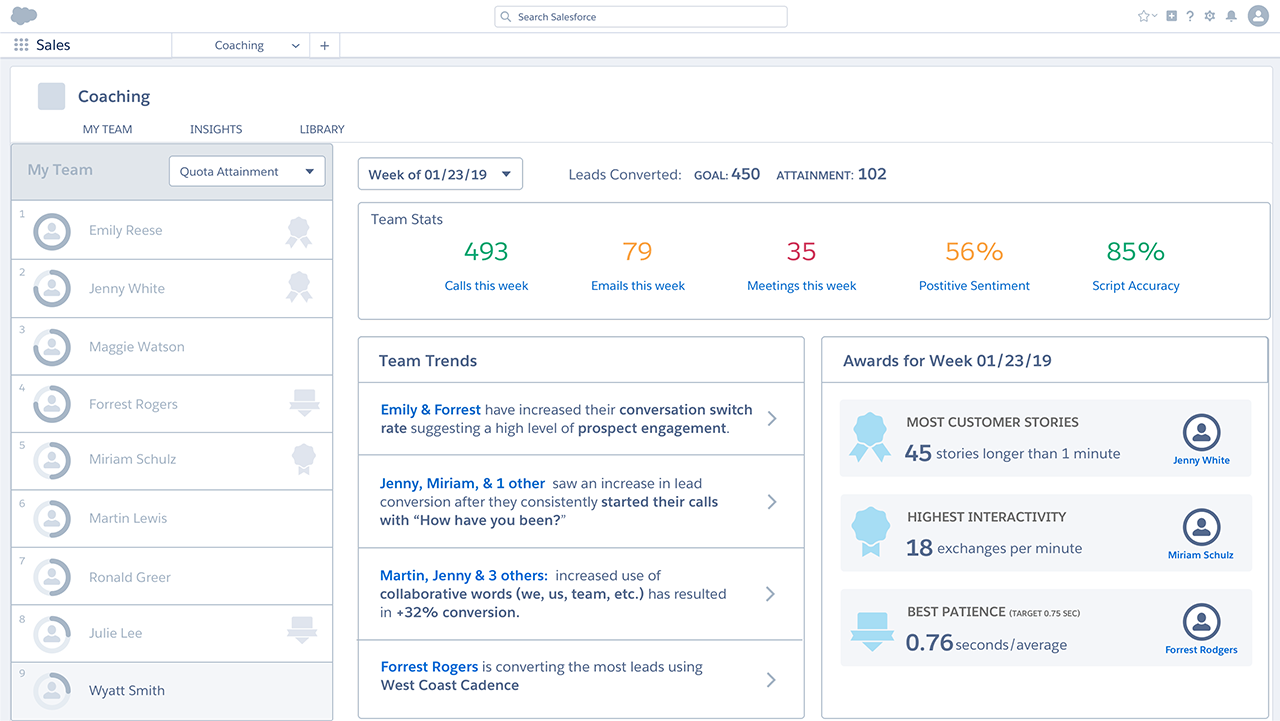
Sketch of Manager View of Team
Single page view of entire team's performance, including insights that have emerged across conversations.
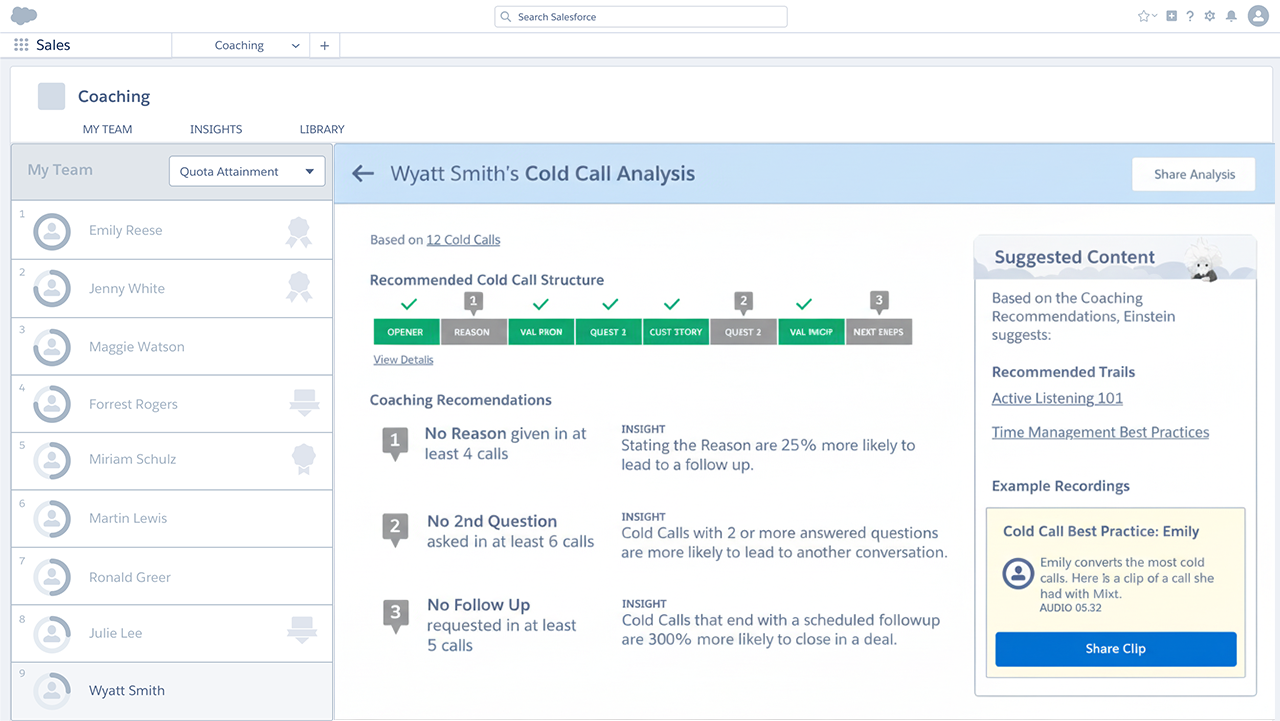
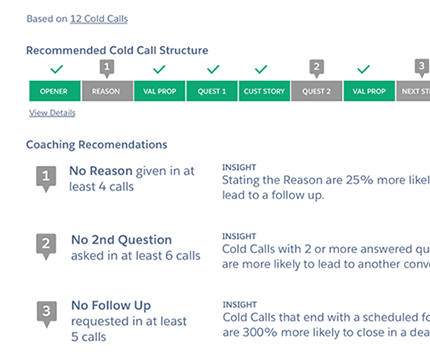
Sketch of Individual Sales Rep Performance
Aggragate of cold-calls analyzed for accuracy and quality
Missteps and Course Corrections
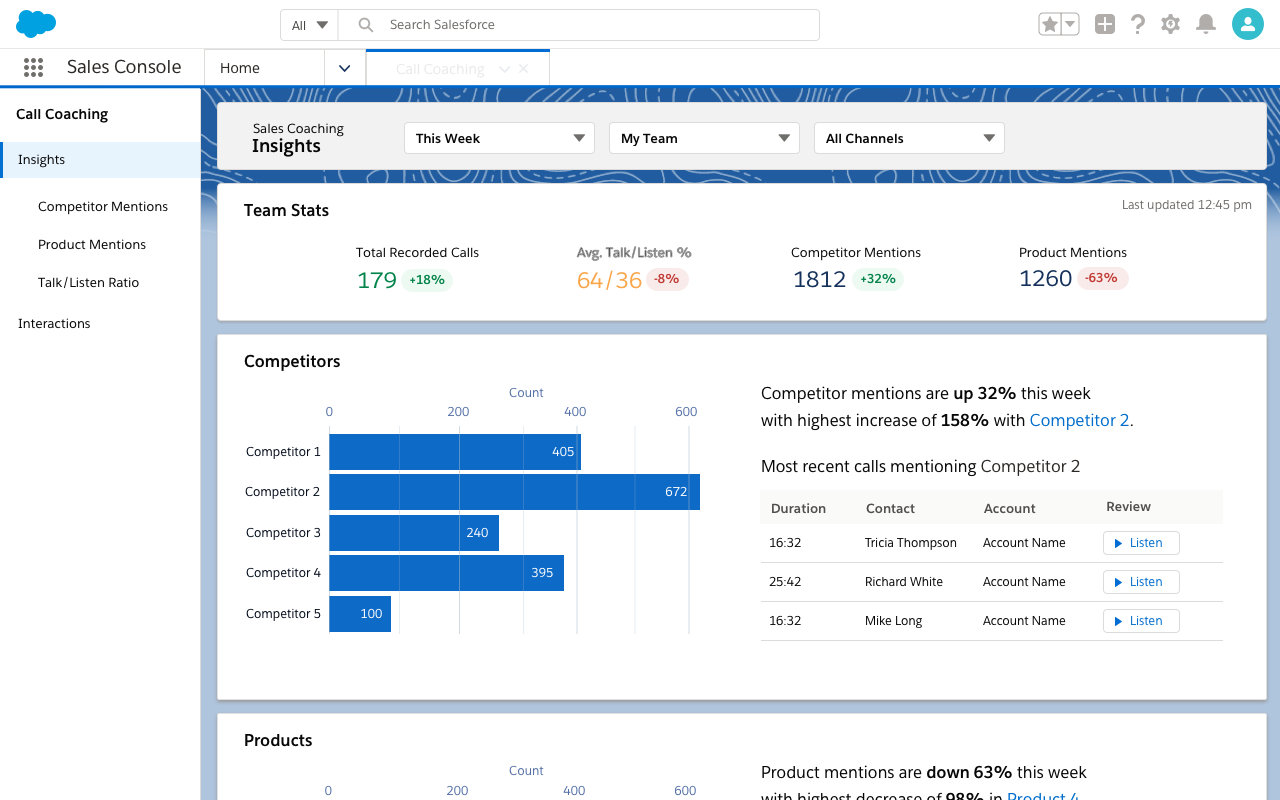
Conversations with frontline managers quickly revealed resistance to focusing on script accuracy. Managers coached reps to personalize calls to their own voice and style. What they needed instead were foundational, comparable signals such as talk-to-listen ratios, competitor mentions, and objection types that could inform coaching without dictating behavior.
Revised Focus on the Call
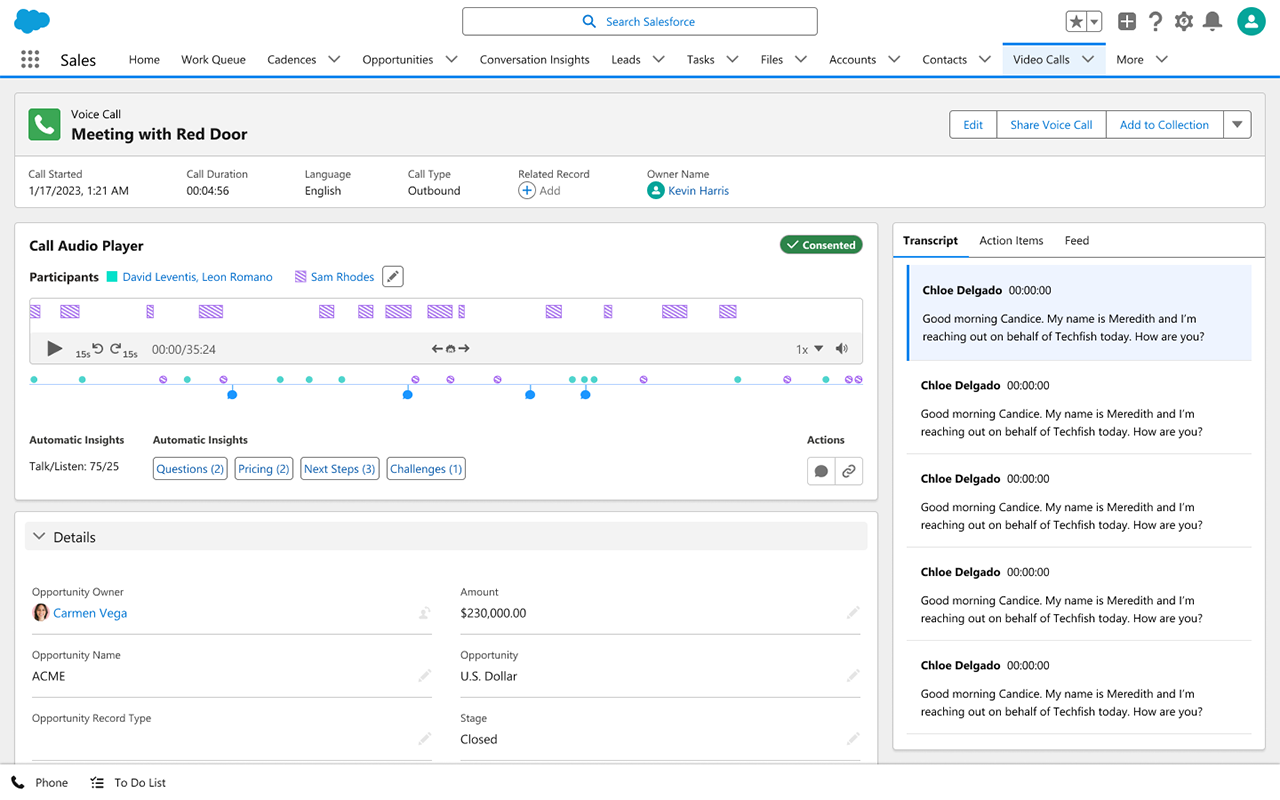
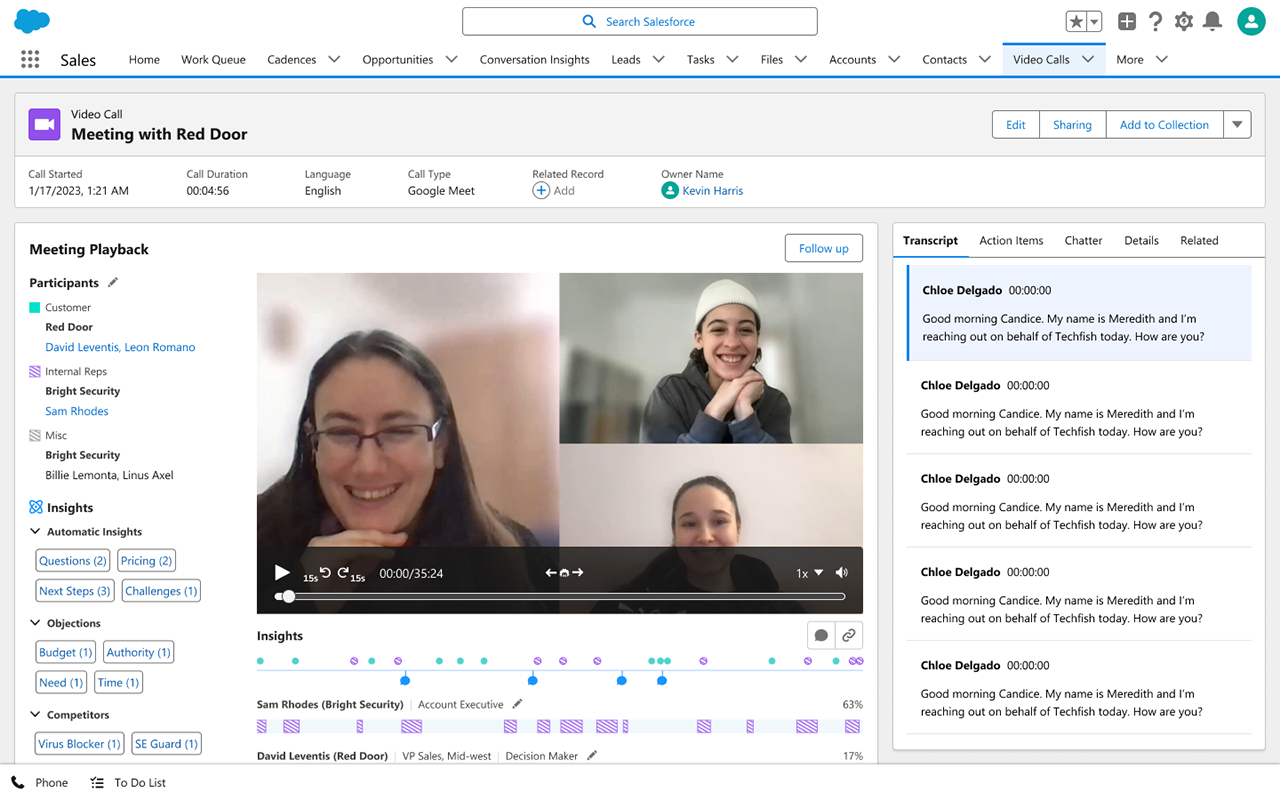
We restructured the experience around the individual call as the core record. AI insights were embedded directly into the call timeline, allowing managers to quickly identify key moments. Signals were prioritized by frequency and change over time, balancing proactive insight with cognitive load.
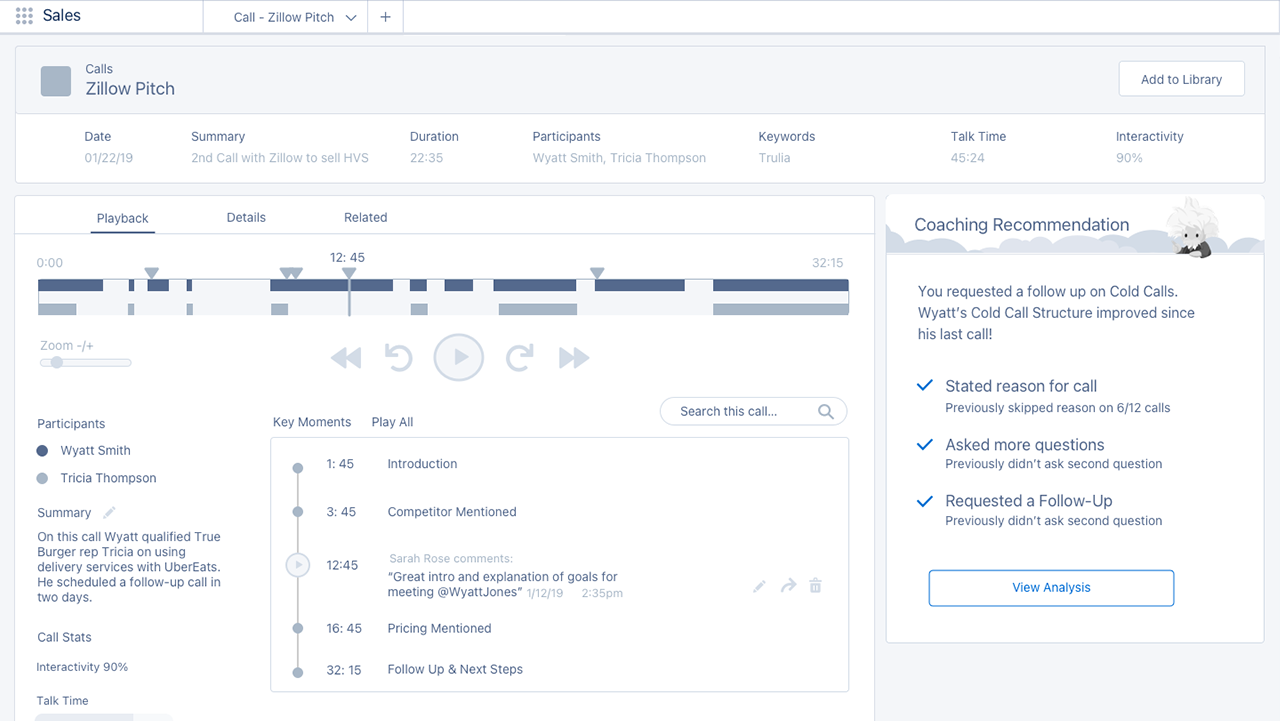
Final MVP Designs
The final system centered on interpretable, call-level insights that rolled up into team and organizational trends. These insights supported coaching, deal execution, and strategic decision-making across the CRM, establishing conversation intelligence as a scalable, enterprise capability.
Impact and Reflection
2.5x
Deals Closed
Increase in deals closed by sales teams
+29%
Productivity
Teams reported increase in productivity up to 29%
Key Learnings
My Senior Designer Takeaway
Trust, context, and restraint drove adoption more than AI novelty.
Adoption Reality
- Requested AI features did not guarantee usage
- Continuous iteration was required for impact
Language Matters
- Each organization had a unique sales lexicon
- Models had to adapt to be accurate and actionable